
Emergency Drugs Quick Guide – Adult Doses, Indications & Ward Checklist
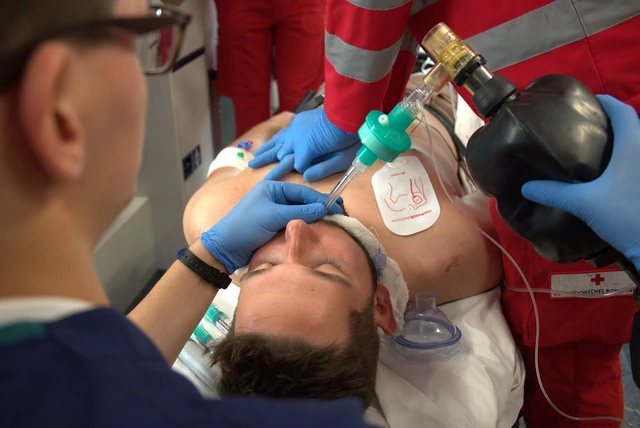
A fast, reliable reference for common emergency drugs. Includes adult IV/IM doses, immediate notes and a printable one-page PDF for the trolley or phone.
Read this first – key safety rules
Confirm patient identity and weight when possible. Always follow local protocols and resus team instructions. For paediatric dosing and infusions use standard pediatric guides, not this adult sheet.
This is an educational revision reference, not a hospital drug chart. The calcium-gluconate and magnesium entries below have been updated using the UK MHRA severe-hyperkalaemia safety alert and RCUK 2025 adult tachyarrhythmia algorithm. Check the selected local protocol, formulation, patient factors and pharmacy guidance before clinical use. The linked original PDF is an archived source resource; it has not been updated or clinically revalidated with these article corrections. References: https://www.gov.uk/drug-safety-update/calcium-chloride-calcium-gluconate-potential-risk-of-underdosing-with-calcium-gluconate-in-severe-hyperkalaemia and https://www.resus.org.uk/sites/default/files/2025-10/Adult%20tachyarrhythmia%20algorithm%202025.pdf
Download the one-page PDF Preview free sample notes View All-21 notes bundle
Also useful: Pharmacology mnemonics PDF, Antibiotics quick guide, ABG flowchart, ECG cheat sheet
How this guide is organised
Each entry lists the common adult indication, a typical IV or IM emergency dose and one quick clinical note. The PDF is printable and formatted for a single A4 page so you can keep it on the trolley or phone.
Top emergency drugs – snapshot table
| Drug | Indication | Usual adult dose | Quick notes |
|---|---|---|---|
| Adrenaline | Cardiac arrest; anaphylaxis | Arrest: 1 mg IV every 3-5 min. Anaphylaxis: 0.5 mg IM. | In arrest give IV; for anaphylaxis give IM and call for help. |
| Atropine | Symptomatic bradycardia | 500 mcg IV bolus, repeat q3-5 min to max 3 mg | If ineffective consider pacing; check cause. |
| Amiodarone | VF/VT arrest | 300 mg IV bolus, second dose 150 mg | Monitor blood pressure and QT; use per ACLS guidance. |
| Adenosine | Regular narrow-complex SVT | 6 mg rapid IV bolus, then 12 mg if needed | Give via large-bore IV with saline flush; contraindicated in pre-excited AF. |
| Naloxone | Opioid overdose | 0.4-2 mg IV/IM, repeat as needed | Titrate to restore respiration; may precipitate withdrawal. |
| Calcium gluconate | Hyperkalaemia with ECG changes | UK MHRA severe-hyperkalaemia reference: 30 mL of 10% IV over 10 min. Verify formulation, ECG response and the local protocol. | Stabilises myocardium but does not lower K. |
| Insulin + Dextrose | Hyperkalaemia shifting therapy | Insulin 10 units IV + 25 g dextrose | Monitor glucose and arrange K removal therapy. |
| Magnesium sulphate | Torsades de pointes; severe asthma | RCUK 2025 reference for polymorphic VT with QT prolongation: Mg2+ 8 mmol IV over 10 min; follow the relevant resuscitation pathway. | Check renal function; monitor for hypotension. |
| Tranexamic acid | Major haemorrhage | 1 g IV over 10 min, then 1 g over 8 hrs if indicated | Give early in trauma or postpartum haemorrhage per protocol. |
| Aspirin | Suspected acute coronary syndrome | 300 mg oral chewable immediately | Unless contraindicated; part of initial ACS pathway. |
Practical usage notes
- Always check allergies and recent drug chart entries before giving any drug.
- For repeated boluses and infusions check local infusion concentrations and syringe pump protocols.
- Where IV access is poor, consider intraosseous access per local resus protocol.
- Document time, dose and route immediately after giving, and handover to the receiving team.
Quick decision checklist for the trolley
- Is the patient breathing and perfusing? Support airway and breathing first.
- If arrest: start CPR and follow local ALS pathway while preparing drugs.
- If anaphylaxis: adrenaline IM immediately and call for senior help.
- If bradycardic and unstable: atropine then consider pacing.
- If arrhythmia with haemodynamic compromise: synchronised cardioversion per ACLS.
Where this fits with other MedicalNotes resources
Use this emergency drugs sheet alongside our other one-page clinical PDFs for faster decision making during rounds and exams. Relevant quick links are listed here in order of how often they will be useful during emergencies.
- Pharmacology mnemonics PDF – high-yield drug mnemonics to speed recall.
- Antibiotics quick guide – use for early empiric choices in sepsis and infection.
- ABG interpretation flowchart – handy when acid-base or ventilation decisions matter.
- ECG quick guide – use alongside drug choices for arrhythmia management and STEMI decisions.
- Our product pages with comprehensive notes and bundles: 1400+ medical books bundle and All-21 subjects notes bundle.
Study & exam strategy
For viva and short-answer exams practise saying the drug name, one indication and the key adult dose in one sentence. Example: “Adrenaline for cardiac arrest 1 mg IV every 3-5 minutes, for anaphylaxis 0.5 mg IM, call for senior help”. Spend 10 minutes daily on flashcard drills using the pharmacology mnemonics PDF to speed recall. Prepared for medical students and junior clinicians for rapid reference during wards and exams. Always follow local policies and pharmacy guidance. For paediatric dosing, weight-based calculations and infusion protocols consult your hospital pediatric resus guidelines.